

Welcome back to our final instalment of the series. In part 4 we tackle the last hair type and learn the fundamentals of kinky hair. For those with thick, coarse locks, keep reading! Kinky natural hair can be tough (literally) to handle, usually belonging to people of African and/or Caribbean descent. Many women opt for protective styles — such as weave, extensions or braids — to prevent breakage. Kinky hair is laden with misconceptions: contrary to popular belief, although it’s tightly coiled, kinky hair is very fragile by nature. Due to the complex zig-zag shape of the individual hair strand, the sebum oil cannot reach past an inch or two down the hair shaft. Handle these delicate, dazzling locks with care.
Type 4A hair is coily and forms tight, perfectly cylindrical curls. With curls about the same width of a pencil, this hair is quite springy in nature. Unlike the others in the type four category, 4A hair has a defined curled pattern and tends to fall down, rather than up.
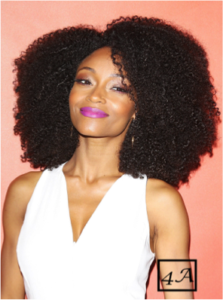
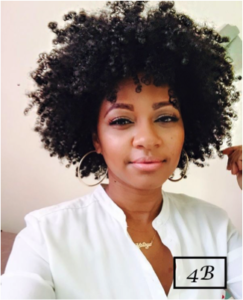
Type 4B hair takes on a tight, crimpy pattern, more so than cylindrical curls. Finding the difference between 4B and 4C hair can be quite difficult, but it’s important to note that although the roots of 4B hair may not be as defined, the ends of the strands will have a clear curl pattern.
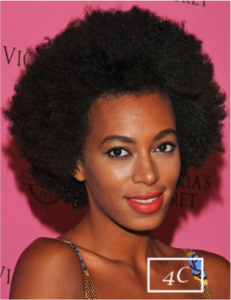
Type 4C hair is the real definition of kink! Consisting of Z-shaped, zig-zag patterns and showing little to no defined sections of hair, 4C hair is a type to be reckoned with. The texture of the individual hair strand ranges greatly, from thin/fine to wiry and coarse. 4C hair is known to shrink by more than half its length when wet.
Maintenance tips:
Another misconception that exists is that this hair type does not grow. However, kinky hair grows at the same rate as the other textures – it just breaks more when not treated properly. That’s why it’s important to treat this hair type like the finest silk; cleanse and detangle softly, avoid manipulation and stay away from harsh chemicals.
- We’ve established how dry type four hair can be. A way to combat this? Moisture, moisture, and more moisture! Thoroughly moistened hair is agile and retains elasticity, so using a spray bottle to spritz some water over the hair every so often can go a long way.
- Use creamy, sulfate free, moisturising cleanser, and follow suit with a super hydrating conditioner when it comes to wash day.
- It’s imperative to use natural oils and rich butters, such as in the Shae Moisture or Cantu brands.
- Avoid mineral, petrolatum oil and heavy waxes.
- Look for moisturising humectants, natural conditioning agents and exotic extracts to add that little bit of moisture to the locks.
- Use a silk scarf or satin cap at night to keep the moisture locked in.
And there you have it! With all the basics covered, you’ll be able to determine which category your hair falls into. Keep in mind, that it’s best to test the characteristics and behaviour of your hair when it’s freshly washed, air-dried and free of all products — only then will you achieve true results.
We hope that you’ve learned a little bit more about how to better care for your precious locks. After all, it’s important to love and embrace your hair while keeping it healthy. If you have any queries, be sure to chat with us at info@briahair.com or on our socials. Until next time, ladies!
Written by: Deborah Lewis